





- Jun 24, 2026
- Story
Rivalry to Respect: What Chris Evert and Martina Navratilova Teach Young Players About Competition
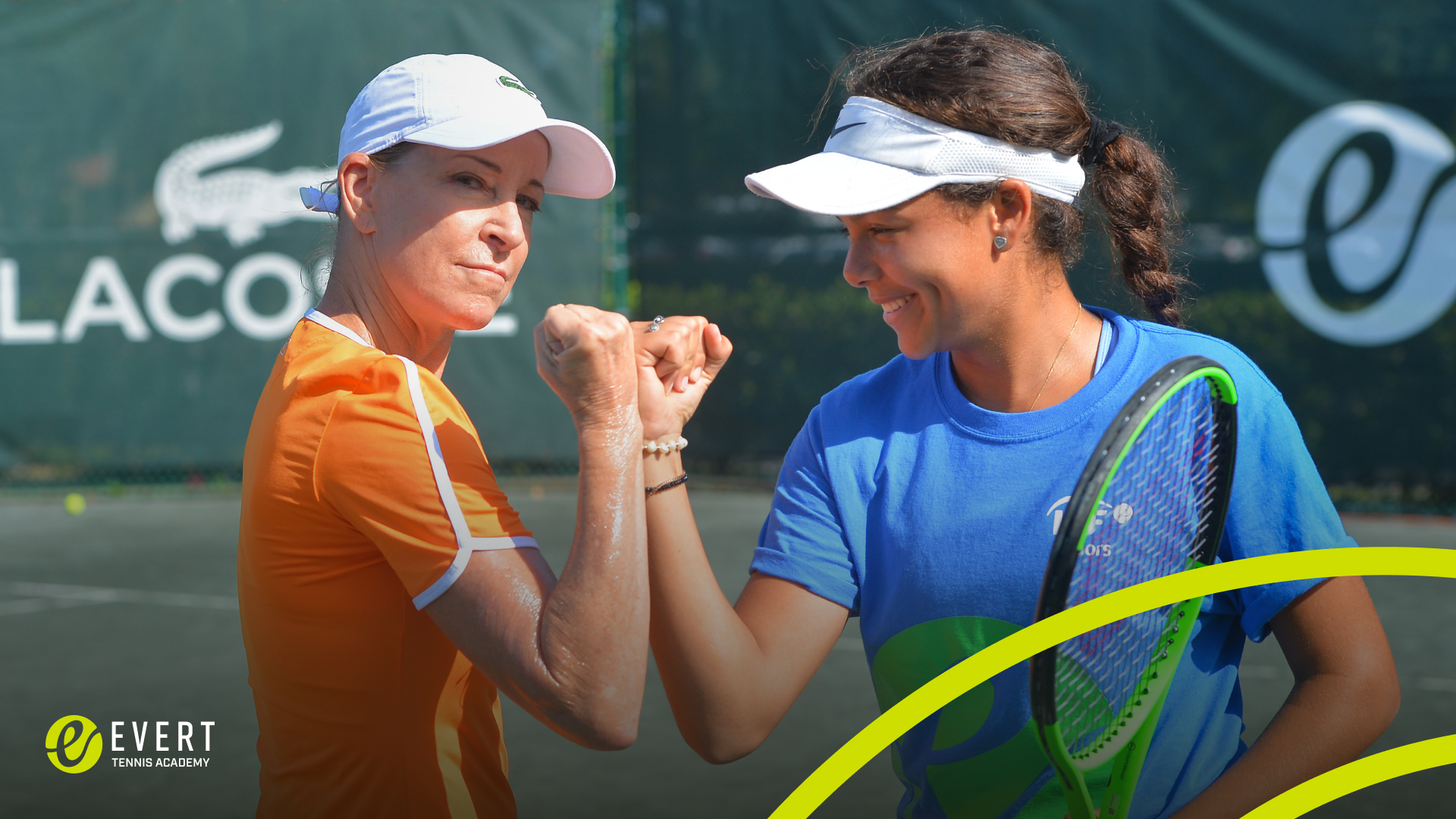
Chris Evert, co-founder of Evert Tennis Academy and one of the most consistent champions in tennis history, is the subject, alongside Martina Navratilova, of Chris & Martina: The Final Set, the new Netflix documentary releasing June 26. The Netflix film follows two of the greatest competitors the sport has produced through the rivalry that defined women’s tennis for fifteen years, and the friendship that grew out of fifteen years of trying to beat each other. They met on a tennis court 80 times between 1973 and 1988. They met in 14 Grand Slam finals. They each held the world number-one ranking. They each retired with 18 Grand Slam singles titles. And by the end of it all, they were friends.
That’s the story the Netflix documentary tells. We won’t try to retell it. But for anyone who develops young tennis players, coaches, parents, and the players themselves, there are lessons inside that rivalry worth paying attention to. They’re not the lessons that make headlines. They’re the quiet ones, the ones that show up not in any single match but in the choices a player makes over years of competing against the same opponents.
Here’s what we take from it.
A rivalry forces you to become better than you would have been alone
Tennis at the highest level is solitary. You’re the only one on your side of the court. No teammates to compensate for your bad days. No bench to come off. If you want to get better, you have to find your improvements yourself.
A great rival changes that. Chris Evert and Martina Navratilova made each other better in ways that solo training couldn’t have. Evert’s consistency from the baseline forced Navratilova to develop her net game beyond what she would have needed otherwise. Navratilova’s serve-and-volley forced Evert to find a passing shot more reliable than any other player on tour. Each of them was the problem the other one had to solve. Every match, every season, for fifteen years.
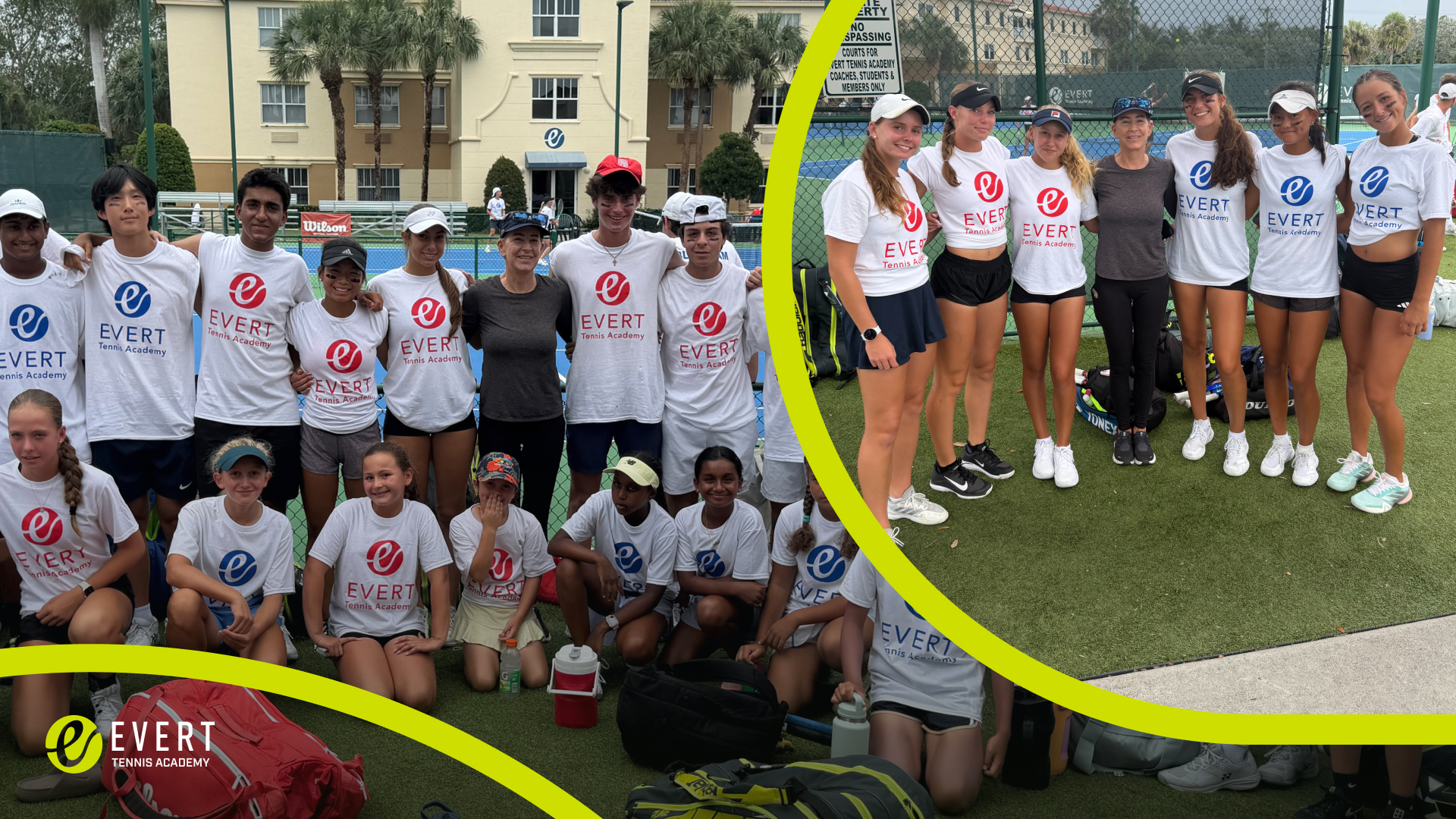
At Evert Tennis Academy, we see versions of this pattern at the junior level constantly. The players who develop fastest are the ones who train week after week against someone close to their level, close enough that neither of them is comfortable, both of them keep finding gaps in each other’s games. A junior playing only practice partners they easily beat develops slowly. A junior playing someone slightly better, week in and week out, develops fast.
This is part of why match-play time matters as much as drilling. The technical work builds the foundation. The competitive work, against people who can hurt you, is where the foundation gets stress-tested and the gaps reveal themselves. Young players who avoid those matches because the losing is uncomfortable are protecting themselves from the very thing that would make them better.
Different games can both be great games
If you watched Chris Evert play and you watched Martina Navratilova play, you saw two completely different versions of tennis. Evert played from the baseline with rhythm and depth. Navratilova attacked, came forward, hit volleys other players couldn’t have reached. They were both correct. Tennis is wide enough to accommodate radically different styles, and trying to make every player play the same way is the fastest path to mediocrity.
This matters for junior development. There’s an unfortunate pattern in junior tennis where coaches try to fit every player into the same template. The modern baseline grinder, all topspin, all from behind the line. It works for some players. For others it suppresses what would have been their actual strengths.
Coaches at the academy spend the first weeks of any new student watching, not correcting. We’re trying to see what the player naturally does well. What shots come naturally, what court positions they instinctively reach for, what their athletic body wants to do. The development plan that follows is built around amplifying those strengths and shoring up the weaknesses that would otherwise be exploited.
The Chris-Martina contrast is the strongest possible argument for that approach. Two of the greatest players who ever lived, both reaching the top of the same sport at the same time, through completely opposite means. There isn’t one right way to play tennis. There’s the way that fits the player.
Respect doesn’t mean you go easy
This is the line that gets blurred most often in junior tennis: the idea that being kind to your opponent means not playing your hardest against them. It’s well-intentioned and it’s wrong.
Chris Evert and Martina Navratilova didn’t go easy on each other for fifteen years. They went after each other in every Grand Slam final, every tour stop, every chance they got. They competed at the absolute limit of what they could bring. And from that, not in spite of it, but from it, came one of the most lasting friendships in the history of women’s sport.
The lesson for young players is one we come back to often: the highest respect you can show another player on a court is to play as hard as you can against them. Not playing your hardest sends the opposite message, that you didn’t think they deserved your best, that you assumed you had this match in the bag, that you weren’t taking the competition seriously. Junior players who learn this early carry it through their entire competitive careers. Junior players who don’t tend to develop unhelpful patterns. They try to win without trying too obviously, they save themselves for the matches that “matter,” and they leave development on the table.
Mental conditioning at the academy includes deliberate work on this distinction. There’s no contradiction between competing hard and being a good sportsman. Sportsmanship lives in the handshake, in the body language between points, in how you treat line calls and how you accept losses. Effort lives in the tennis. Both can be at maximum at the same time.
A career is longer than any one match
By the time Chris Evert and Martina Navratilova played each other for the eightieth time, they’d known each other for almost twenty years. Some of those matches Chris won. Some of them Martina won. The head-to-head record finished 43-37 in Navratilova’s favour, narrow enough that flipping six of those matches would have reversed it.
What’s striking, looking back, is how little any individual match seems to matter from a distance. The first French Open semi-final loss. The Wimbledon final win. The Australian semi where one of them retired with injury. From within those matches each one felt like everything. From here, you have to look them up to remember which was which.
The lesson lives in that gap. Junior players, especially competitive ones, can become so emotionally invested in any single match that a loss feels like a referendum on whether they should play tennis at all. The truth is that a single match is one data point in a career that will involve thousands of them, and the career is built from how the player responds to all of them collectively, not from which specific ones were won.
We try to help our players hold this longer view. A loss in a junior tournament is information about what to work on. A win is information about what’s working. Neither one defines the player. The player who can absorb a loss and walk back to practice on Monday morning more focused than they were before is the player who keeps improving. The player who needs every match to be validating tends to plateau early.
What the Netflix documentary may help young players see
For viewers who watch Chris & Martina: The Final Set on Netflix and come away thinking about their own competition, whether they’re junior players, parents of junior players, or coaches, there’s a quiet message worth carrying out of the Netflix film.
The best rivalries aren’t built on hatred. They’re built on respect for someone whose excellence demanded yours. The best wins aren’t the ones that crush someone. They’re the ones you earned against someone playing their best. The best losses aren’t catastrophes. They’re chapters in a longer story that hasn’t finished yet.
Forty years on from their last match against each other, Chris Evert and Martina Navratilova are still in each other’s lives. That’s not the kind of friendship that comes from going easy. It’s the kind that comes from spending fifteen years pushing each other to be better than either could have been alone, and then realising, somewhere along the way, what they’d actually been building.
It’s the long game. It’s what tennis can be at its best. And it’s what we try, every day at Evert Tennis Academy in Boca Raton, the academy Chris co-founded with her brother John in 1996, to teach the next generation of players to look for.
Read more about Chris Evert and our founding story.
Learn how we approach mental conditioning and competitive tournament play.
Interested in our training programs? Request more information.